An Afternoon of Chamber Music: Seth Quay's Faculty Recital

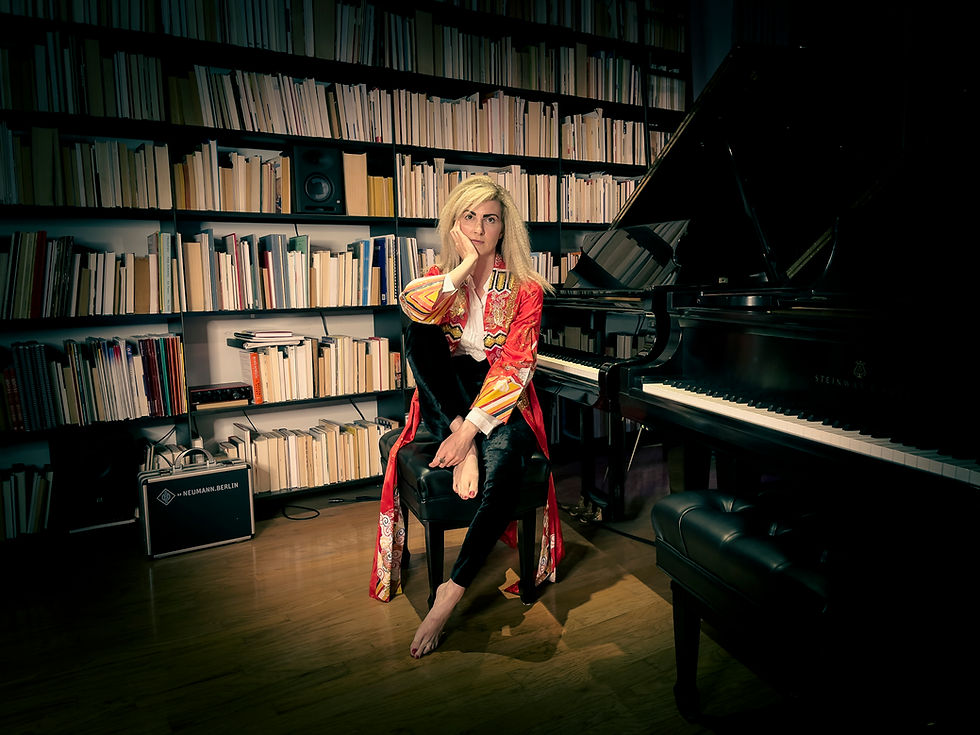
On Saturday, June 20th, sdpa faculty pianist Seth Quay took the stage for a piano trio, joined by cellist Katie Burns and violinist Renaudo Robinson, for an afternoon of chamber music. It was a wonderful opportunity for our students to see faculty performing at the highest level of artistry and collaboration. Watching skilled musicians work together in chamber music offers a kind of insight and inspiration a lesson alone can't replicate, and it's exactly the standard we want every sdpa student to grow up hearing.
Missed it live? A full replay of the performance is available below.
The Performers
Seth Quay holds a Bachelor of Music in Piano Performance from the University of Montana and a Master of Music in Piano Performance and Pedagogy from the University of Denver. His success as a pianist earned him a performance of Ravel's Concerto in G Major with orchestra and national-level recognition in the MTNA Young Artist Competition. A versatile artist deeply committed to new music and collaboration, Seth is also nationally recognized as a presenter on mindfulness in music education.
Katie Burns is an accomplished cellist and educator who has performed across the United States and Europe at prestigious venues. She maintains an active private studio and serves as String Pedagogy Specialist for El Sistema Colorado, a program dedicated to enriching young people's lives through music.
Renaudo Robinson is an accomplished soloist and chamber musician who currently serves as concertmaster of the City Ballet Orchestra of San Diego. He holds dual bachelor's degrees from the University of Michigan and graduate degrees in violin performance from DePaul University. He maintains a private teaching studio in Los Angeles and has performed with ensembles nationwide.
The Program
Merry-Go-Round of Life — Joe Hisaishi, arr. Grissini Project
Night — Florence Price, arr. Merz Trio
Czardas — Vittorio Monti, arr. Layers
Liebestraum — Franz Liszt, arr. Richard Klugescheidt
Piano Trio No. 2 in C Minor, Op. 66 — Felix Mendelssohn
I. Allegro energico e con fuoco
II. Andante espressivo
III. Scherzo
IV. Finale: Allegro appassionato
Program Notes
The piano trio, typically consisting of piano, violin, and cello, is one of the most enduring and versatile ensembles in classical music. Emerging in the late eighteenth century, the genre evolved into a true partnership among three equal voices. Composers such as Haydn, Mozart, Beethoven, Mendelssohn, Brahms, and Dvořák favored the piano trio as a vehicle for both intimate conversation and symphonic-scale expression.
The unique combination of instruments offers a remarkable range of color and texture: the piano provides harmonic richness and rhythmic drive, while the violin and cello contribute contrasting timbres that can sing, converse, and intertwine. This program showcased the versatility of the piano trio, from beloved film music and Romantic miniatures to virtuosic showpieces and one of the nineteenth century's greatest chamber music masterpieces.
Merry-Go-Round of Life
Joe Hisaishi (b. 1950), from Howl's Moving Castle (2004), arr. Grissini Project
Few film composers have achieved the international acclaim of Japanese composer Joe Hisaishi, whose long collaboration with filmmaker Hayao Miyazaki and Studio Ghibli has produced some of cinema's most beloved scores. Merry-Go-Round of Life serves as the principal theme for Howl's Moving Castle, a fantastical tale of magic, war, and transformation.
Night
Florence Price (1887–1953), arr. Merz Trio
Florence Price holds a landmark place in American music history as the first African American woman to have a symphony performed by a major American orchestra. Her music is now recognized as a vital missing chapter in American classical music history. While she is increasingly celebrated for her orchestral works, her songs and shorter piano pieces reveal a deeply personal and lyrical voice.
Night, originally composed as a song, is one of Price's most evocative miniatures. The piece's serene, moonlit atmosphere demonstrates her grounding in Romantic and Impressionistic harmonic traditions, while its soulful melodic lines hint at the spirituals and hymns that shaped her artistic voice.
Night comes, a Madonna clad in scented blue.Rose red her mouth, and deep her eyes,She lights her stars, and turns to where,Beneath her silver lamp the moon,Upon a couch of shadow liesA dreamy child,The wearied day.— Louise C. Wallace
Czardas
Vittorio Monti (1868–1922), arr. Layers
Composed in 1904, Czardas has become one of the most celebrated showpieces in the violin repertoire. Although its composer, Vittorio Monti, was Italian, the work draws inspiration from the Hungarian czárdás dance, known for its dramatic contrast between slow, expressive sections and dazzling fast passages.
The combination of folk-inspired melodies and technical brilliance has made Czardas a favorite among performers and audiences alike. This arrangement preserves the work's electrifying spirit while showcasing the collective virtuosity of the ensemble.
Liebestraum
Franz Liszt (1811–1886), arr. Richard Klugescheidt
Franz Liszt's Liebestraum ("Dream of Love") was originally conceived as a set of songs and later reimagined for solo piano. Liebestraum became especially famous for its soaring melodies and expressive emotional range, blending Liszt's hallmark virtuosity and poetic expression, and balancing technical brilliance with a tender meditation on love.
Piano Trio No. 2 in C Minor, Op. 66
Felix Mendelssohn (1809–1847)
Completed in 1845, Mendelssohn's second piano trio stands among the crowning achievements of the Romantic chamber music repertoire. Written during the final years of the composer's life, the work combines passionate intensity with the clarity, balance, and craftsmanship that characterize Mendelssohn's style.
I. Allegro energico e con fuoco — The opening movement sets the emotional stakes immediately with restless energy and dramatic urgency.
II. Andante espressivo — The second movement offers a lyrical contrast, unfolding as a tender and songlike melody. Often compared to one of Mendelssohn's celebrated Songs Without Words, the movement features flowing melodies over rich piano harmonies that create an atmosphere of gentle introspection.
III. Scherzo — This movement is classic Mendelssohn: quicksilver, whimsical, and weightless, showcasing his unparalleled ability to make chamber music feel airborne. The music vanishes as quickly as it appears.
IV. Finale: Allegro appassionato — The final movement returns to the passionate intensity of the opening movement, driving forward with fiery momentum and dramatic emotional depth. It concludes the work with a brilliant transformation from darkness to light, leaving the listener with a sense of luminous, triumphant closure.